
Space Is Becoming Infrastructure
The rocket stopped being the story. What the rocket carries now runs quietly underneath your daily life, and almost nobody has noticed.
Bottom Line Up Front
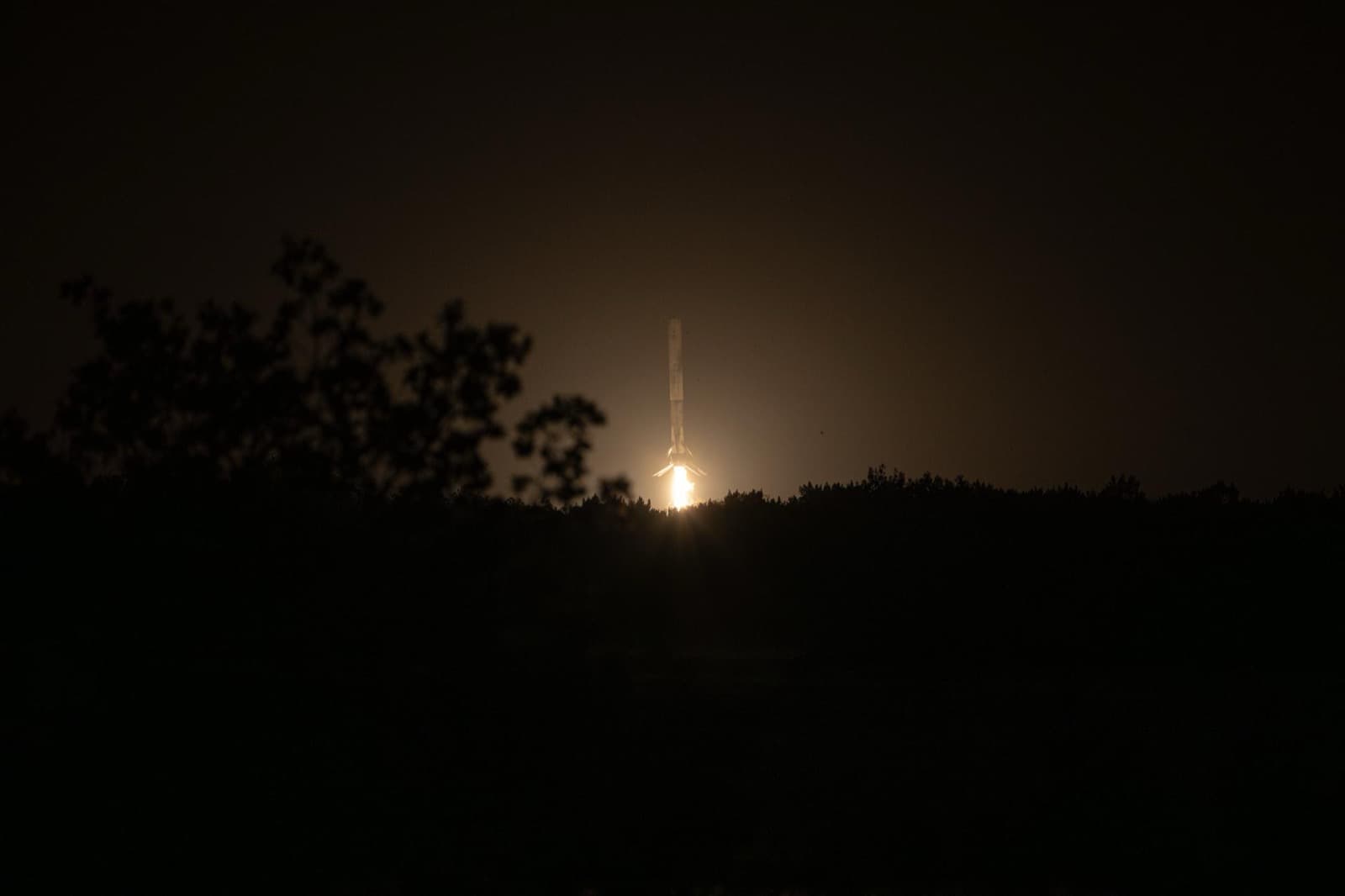
Space stopped being an event and became a utility. The proof is in the cadence: SpaceX alone flew 165 Falcon 9 missions in 2025, roughly one every other day, and the landings barely make the news anymore.
That routineness is the entire story. Reusable rockets collapsed the cost of reaching orbit by an order of magnitude, and cheap access changed what people build up there: not a few exquisite satellites, but constellations of thousands that work like utilities.
Those utilities already run underneath ordinary life: navigation, weather, broadband, imaging, and the timing signals that stamp financial transactions, mostly free, mostly unnoticed.
The military noticed first. Modern warfare now assumes satellite communications and overhead imagery the way it assumes fuel, which makes orbit both a strategic asset and a target.
The investable part of this story is mostly not rockets. It's everything the cheap rocket enables: satellites, ground equipment, spectrum, data services, and the defense budgets flowing toward all of it.
You used space a dozen times before breakfast
Think about your morning. Your phone set its clock off a satellite timing signal. Your weather app pulled from satellite observations. Your commute followed GPS. Your credit-card tap was time-stamped against that same satellite clock, because the financial system synchronizes itself from orbit. And if you live somewhere rural, your neighbor's internet may now arrive from a dish pointed at the sky.
None of this felt like "space." That's the tell. Infrastructure is the stuff you only notice when it breaks. Roads, water mains, the power grid. Space just joined that list, and it happened so gradually that most people still file rockets under "science news" instead of "utilities."
Here's a cardinal-watcher's confession. You notice the cardinal because it's red against the snow; you never count the sparrows. Space coverage works the same way: fireballs and billionaire feuds get the headlines, while the sparrows, the hundred-and-something routine launches that each worked fine, are the actual story. When something boring happens 165 times a year, it isn't news anymore. It's infrastructure.
What actually changed: the price of a kilogram
For half a century, the economics of space were brutal for one reason: the vehicle was thrown away. Imagine airline tickets if every 747 flew once and was scrapped. That was every rocket until about a decade ago. The space shuttle put cargo into orbit at a cost on the order of $50,000 per kilogram. A reusable Falcon 9 does it for a few thousand, and the same booster now flies again and again; one of them logged its 36th flight this July.
Cheap access rewired the logic of what to launch. When each launch costs a fortune, you build one giant, gold-plated satellite and pray. When launch is cheap, you build thousands of small, replaceable ones and treat failures as routine attrition. That's a constellation, and it behaves less like a spacecraft program and more like a cell network: coverage everywhere, redundancy built in, hardware refreshed on a cycle.
Starlink is the existence proof. More than 10,800 of its satellites are working in orbit as of mid-2026, out of over 12,600 launched since 2019, serving millions of subscribers. Of SpaceX's 165 launches in 2025, 123 carried Starlink hardware. The company built the cheap rocket, then became its own best customer, which is roughly what railroads did when they developed the land along their own tracks.
Now trace the chain outward. Cheap launch enables constellations; constellations enable broadband, imaging, and sensing as subscription services; those services flow into agriculture, insurance, shipping, and energy. And every satellite sold pulls demand back down the chain into ground terminals, antennas, and the radiation-hardened electronics that connect orbit to Earth.
Defense is the deepest dependency of all. GPS was a military system first; a federally sponsored study estimated it generated roughly $1.4 trillion in U.S. private-sector benefits between 1984 and 2017 — with a stated range of $900 billion to $1.8 trillion, across ten industries, which is a strange amount of civilization to rest on a free signal. Ukraine demonstrated what commercial satellite connectivity and imagery mean in an actual war, and every defense ministry took notes. The Pentagon's answer is proliferation: instead of a handful of billion-dollar satellites an adversary could target, spread capability across hundreds of cheap ones, launched often. That doctrine only works because launch got cheap, and it turns launch cadence itself into a military capability.
Key Judgments
- Space is now economically an infrastructure sector, not an exploration story. The revenue base has shifted decisively toward services (connectivity, navigation, imaging) rather than launches themselves.
- Launch cadence will likely keep rising over the next several years, and reusability means the marginal flight keeps getting cheaper. A sustained reversal in cadence would be evidence this thesis is breaking.
- Defense budgets are almost certain to deepen their dependence on proliferated commercial-style constellations this decade, blurring the line between commercial and military space.
- Concentration is the system's biggest structural weakness: one company flew roughly 85% of U.S. orbital launches in 2025. Genuine second sources of both launch and broadband would make the infrastructure sturdier, and their absence keeps it fragile.
Risks & Counterarguments
The honest case against: orbit is getting crowded, and debris is the nightmare scenario. Enough collisions in key orbits could cascade, making entire altitude bands hazardous for decades. Operators are already maneuvering constantly, and the rules governing traffic in orbit remain immature.
There's also concentration restated as risk: when a single provider dominates launch and connectivity, one company's failures, finances, or politics become everyone's problem. Satellite broadband must still prove its economics against fiber and cellular, and if next-generation heavy rockets slip badly, the more ambitious constellation math slips with them.
Why It Matters
Utilities are where durable money and durable power live. The people who owned the pipes, rails, and wires of previous buildouts mattered for a century. Orbit is being wired right now, mostly quietly, and the dependence is arriving faster than the public's understanding of it. That gap between dependence and awareness is exactly where it pays to be early.
What We're Watching
- Total orbital launch counts and FAA-licensed launch activity, year over year. Cadence is the heartbeat of the whole thesis.
- Starship and other heavy-lift programs reaching routine operational flights, which would drop cost per kilogram another step.
- Whether a credible second launch provider and second broadband constellation reach real scale, easing the concentration risk.
- Defense procurement of proliferated constellations, and how fast military budgets shift from few-and-exquisite to many-and-cheap.
- Debris incidents and orbital traffic rules. One bad collision could reshape the economics of entire orbits.
Sources: FAA commercial space launch data; NASA; publicly reported SpaceX launch and Starlink figures; NIST-sponsored economic study of GPS; Space Development Agency procurement documents. This is analysis, not investment advice.