
The Next Energy Buildout
For the first time in a generation, America needs more electricity. The grid it's asking is old, slow to expand, and suddenly very popular.
Bottom Line Up Front
For roughly twenty years, U.S. electricity demand didn't grow. Efficiency gains soaked up everything the economy added. That era just ended.
Three forces arrived at once: AI data centers that consume power like small cities, the electrification of cars and heating, and factories being built on American soil again. The forecasters who spent two decades drawing flat lines are now projecting decades of growth.
The supply response is real but slow. Nuclear plants are being restarted for the first time in American history, gas turbines are sold out years into the future, and renewables keep scaling.
But the binding constraint isn't making electricity. It's moving it. Transmission lines take a decade or more to permit and build, and the equipment that runs the grid, transformers especially, is backordered for years.
That makes this a long, physical, unavoidable buildout, the kind that shapes regional economies and utility bills for a generation. Slow stories are underpriced by a world that trades on headlines.
The most boring job in America
For two decades, the least glamorous job in the utility industry was forecasting electricity demand. You drew a flat line. Every year, the economy grew; every year, LED bulbs, efficient appliances, and offshored factories canceled it out. Demand in 2019 looked like demand in 2005. Utility planners were the weather forecasters of a place where it's always 72 and sunny.
Then, around 2023, the phone started ringing. A developer wants to connect a data center that draws as much power as a mid-sized city, in three years, not ten. An automaker needs a battery-plant connection. A chip fab. Thousands of households bought EVs and heat pumps. The flat line bent upward, and it bent everywhere at once.
Watch a bird feeder in late January and you'll understand the grid's situation precisely. A feeder that comfortably served the resident birds for years empties by noon the day three new flocks arrive together. Nothing about the feeder changed. Everything about the demand did. AI, electrification, and reshoring are the three flocks, and they all landed on the same grid in the same handful of years.
Watts, wires, and why both matter
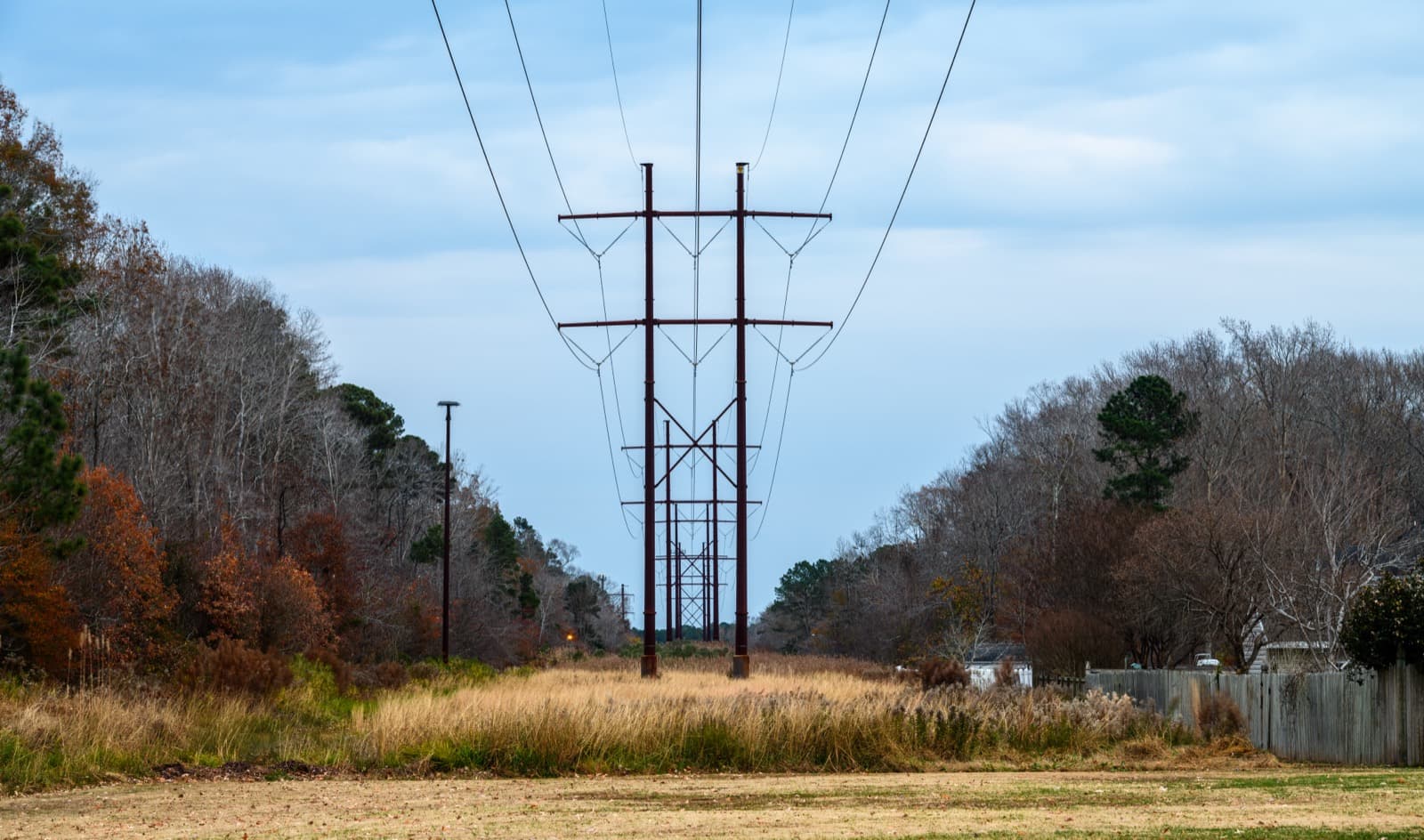
Quick translation, because the energy world hides simple ideas behind units. Generation is making electricity: power plants. Transmission is moving it: the big steel-tower lines that carry power across states. Distribution is delivering it: the poles on your street. The public debate obsesses over generation. The professionals mostly worry about transmission, because you can build a power plant in three or four years, but a major interstate line can take more than a decade of permitting, lawsuits, and negotiation with every county it crosses.
Now the numbers. The Energy Information Administration's 2026 outlook marks the official end of the flat era: demand has grown about 2% a year for five years, and the agency projects generation rising 25% to 50% by 2050, with data centers the single largest driver.
The supply response tells you how seriously the system is taking this. Palisades in Michigan became the first shuttered American nuclear plant ever brought back toward service, backed by a $1.52 billion federal loan guarantee and working through final testing this summer. Three Mile Island's healthy reactor is being restarted on a 20-year power purchase from Microsoft, targeting 2027. When a software company signs a two-decade contract for a nuclear plant's entire output, you're not watching a trend piece. You're watching desperation for firm power, the kind that runs at 2 a.m. in a windless January.
Gas is the bridge, and the bridge has a toll booth. GE Vernova, the largest Western turbine maker, ended the second quarter of 2026 with a 116-gigawatt backlog, and its CEO expects reservations effectively sold out through 2030. Order a large gas turbine today and you're talking about delivery around the end of the decade. Renewables plus batteries scale fastest of all, and they'll take the largest share of new capacity, but they intensify the transmission problem, since the best wind and solar sit far from the cities that need it.
Follow the chain, because this is where systems connect: AI demand pulls on generation, generation pulls on turbines, uranium, and gas; everything pulls on transmission; transmission pulls on transformers, specialty steel, skilled linemen, and staggering quantities of copper. And at the end of the chain sits every household's utility bill, which is becoming the political pressure point of the whole buildout. We traced the AI side of this in Electricity Is the New AI Bottleneck; this is the wider story that bottleneck sits inside.
Key Judgments
- U.S. electricity demand growth is a durable regime change, not a spike. Even if AI spending slows sharply, electrification and reshoring keep the line bending upward.
- Transmission and grid equipment, not generation, will be the binding constraint for most of the next decade. Watch transformer lead times, not power plant announcements.
- Firm power commands a rising premium. Nuclear restarts, life extensions, and long-dated corporate power contracts almost certainly continue, though new large reactors will disappoint on timelines.
- Gas-fired capacity will be built in size through the early 2030s regardless of climate policy, because turbine backlogs, not politics, set the pace.
- Rising retail electricity prices become a first-order political issue, likely inviting intervention in how data centers pay for grid upgrades.
Risks & Counterarguments
The demand side could disappoint. Data-center forecasts contain double-counting: projects announced in three states that will be built in one. AI efficiency gains per computation are real and compounding, and if model economics sour, hyperscalers can cancel gigawatts of plans with a press release. Utilities learned this exact lesson in the early 2000s, when a projected internet-driven demand boom mostly didn't arrive.
Supply could also surprise to the upside: batteries keep getting cheaper, and grid-enhancing technologies can squeeze more out of existing wires faster than new lines get built. And nuclear restarts are single-digit gigawatts in a four-thousand-terawatt-hour system; they matter more as signal than as supply.
Why It Matters
Electricity is the substrate under everything else this publication covers: AI, factories, defense production, even housing costs in fast-growing metros. A generation of investors learned to ignore utilities and grid equipment because nothing ever grew. That reflex is now exactly wrong, and unlearning it early is worth more than any single stock pick.
What We're Watching
- EIA demand data versus forecasts, quarterly. The gap between projected and delivered demand is the single most important number in this story.
- Transformer and turbine lead times. Shortening would ease the whole system; lengthening would tighten it further.
- Palisades reaching sustained commercial operation, and whether the Three Mile Island restart holds its 2027 date.
- Major transmission projects clearing permitting, and any federal reform that meaningfully shortens the decade-long timeline.
- Retail electricity price trends in data-center-heavy states, the leading indicator of political backlash.
Sources: U.S. Energy Information Administration Annual Energy Outlook 2026; Department of Energy loan program documents; NRC filings; GE Vernova earnings disclosures; utility integrated resource plans. This is analysis, not investment advice.