
Why Copper Matters
Every big story of this decade — AI, the grid, EVs, defense — runs through one metal. And the mines can't answer the phone for seventeen years.
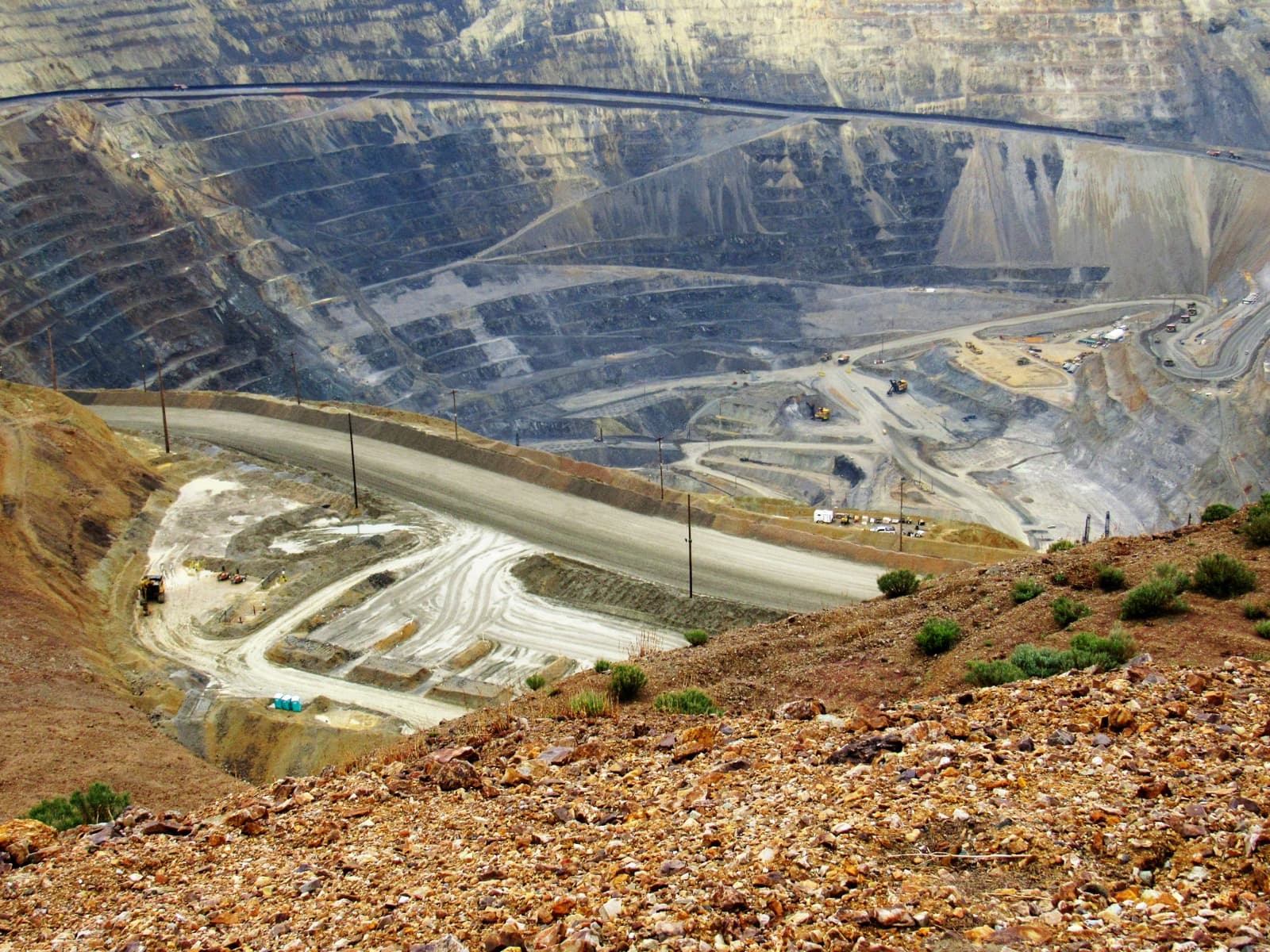
Bottom Line Up Front
Almost every theme in this archive — AI data centers, the grid buildout, electric vehicles, rearmament — converges on a single physical input: copper.
Demand is set to grow enormously. S&P Global projects global copper demand rising roughly 50% by 2040. The near-term market, though, is currently forecast to be in surplus — the shortage case is a 2030s argument, not a 2026 one.
Supply cannot respond the way economics textbooks promise. A new copper mine takes about 18 years on average to go from discovery to production globally, and closer to 29 in the United States. Today's prices cannot summon metal that needed permits in 2010.
This isn't a trading call. It's a structural squeeze between demand curves measured in years and supply timelines measured in decades — worth understanding because everything electric sits on top of it.
The seventeen-year phone call
Imagine a geologist strikes a genuinely great copper deposit tomorrow morning somewhere in Arizona. Champagne, headlines, a stock that doubles. Now ask: when does that discovery produce its first ton of usable metal?
The honest answer is sometime around the mid-2040s. First, years of drilling to map the ore body. Then feasibility studies, environmental review, permits, litigation, more permits. Then several billion dollars of construction. S&P Global tracked recently opened mines and found the average journey from discovery to production now runs 17.9 years worldwide, and roughly 29 in the United States with its layered permitting.
Hold that number, because it's the entire copper story. When oil demand rises, shale drillers respond in months. When copper demand rises, the answer arrives when today's kindergartners finish graduate school. Price can ration copper. It cannot create it on any timeline that matters this decade.
Why one metal is under everything
Copper's virtue is boring: it conducts electricity better than anything except silver, at a fraction of silver's price, and it doesn't rust away. So it became civilization's default wire. Every trend that involves moving electrons — which is to say, every trend we cover — is secretly a copper order.
Walk through them. The grid is the biggest customer: every mile of new transmission, every substation, every transformer is wound and strung with copper, and we're beginning the largest grid expansion in two generations. An electric vehicle contains roughly three to four times the copper of a gasoline car; the motor is essentially a copper sculpture. Data centers are the newest arrival: power distribution, busbars, cooling, and backup systems are copper-dense, and analysts now expect AI data centers alone to consume on the order of half a million tonnes a year by 2030 — a demand category that barely existed five years ago. Defense draws quietly on the same supply: munitions, ships, military electronics. And when the U.S. Geological Survey moved in 2025 to add copper to its critical minerals list, it was formal acknowledgment that a country importing roughly half its copper now sees a strategic problem, not just a commodities story.
Now the supply side — and here the near-term evidence cuts against the shortage story, so it is worth stating plainly. The International Copper Study Group spent 2025 warning of a 150,000-tonne refined deficit for 2026. It has since reversed that call, and now projects a surplus of about 96,000 tonnes in 2026 widening to roughly 377,000 tonnes in 2027, on softer demand growth and more recycled output. The near-term market is not short of metal.
The structural case therefore does not rest on next year's balance, and anyone selling it that way is overreaching. It rests on the 2030s, where S&P Global's longer-run work sketches shortfalls growing toward millions of tonnes annually as demand heads toward 42 million tonnes by 2040. Meanwhile the world's great mines are aging: ore grades have declined for decades, so each tonne of metal requires moving more rock with more energy and more water. The cost treadmill speeds up every year.
Trace one full chain to see the system: AI demand → data centers → grid expansion → transformers and transmission lines → copper → mine permitting in Arizona, Chile, and the Congo → and, when mines can't respond, back up the chain as higher costs for every link above. Scrap helps, since copper recycles beautifully, but scrap supply depends on what was built decades ago, and the world is building far more than it's retiring.
Every food chain in a forest looks different at the top — hawks, foxes, songbirds — but trace any of them downward and you arrive at the same few inches of soil. Copper is the soil of the electrical economy. The themes above it get the attention; the layer they all feed on gets noticed only when it thins.
Key Judgments
- Copper demand growth this decade is close to a lock: grid spending, EVs, and data centers are all funded, physical programs already underway. The demand side of this thesis fails only if the entire buildout fails.
- Mine supply is likely to undershoot demand growth later this decade, because the projects that could close the gap needed to start permitting years ago and mostly didn't. Note that this is a forecast about the 2030s: the balance for 2026 and 2027 is currently projected as surplus, and a thesis that needed next year to be tight is already wrong.
- Structurally higher real copper prices are more likely than not over the next five years, though with violent cyclical swings along the way.
- Substitution (aluminum in transmission and some wiring) and recycling will cap the upside — recycling is already a live reason the 2026 balance flipped to surplus.
- Permitting reform is the wildcard: a genuine shortening of U.S. mine timelines would change the long-run picture, and is worth watching more than any price target.
Risks & Counterarguments
The bear case deserves respect. China still drives roughly half of global copper demand, much of it tied to a construction sector in long decline; a hard Chinese slowdown could swamp the new demand sources for years. Aluminum substitution is real where copper gets expensive — overhead transmission lines already use it. Demand forecasts for AI data centers may prove inflated, as many announced projects will never break ground. And mining has embarrassed supply pessimists before: leaching technologies that pull copper from waste rock could add supply without a single new mine. The squeeze thesis is about timing mismatch, not permanent scarcity, and timing mismatches eventually resolve.
Why It Matters
Most readers will never trade a copper future, and that's fine. The reason to understand copper is that it's the truth serum for every other thesis in this archive. If the energy transition, the AI buildout, and rearmament are real, it must show up in copper demand — and if copper stays cheap and abundant for years, that's the physical world quietly disputing the narrative. One metal, honest testimony.
What We're Watching
- Global refined copper balance from the International Copper Study Group — the 2026 call has already flipped from deficit to surplus once; watch whether the 2027 surplus holds.
- Exchange inventories on the LME, COMEX, and Shanghai. Sustained draws are the physical signal that paper forecasts are coming true.
- U.S. mine permitting: whether long-stalled projects like Resolution Copper advance, the test of whether 29-year timelines can shrink.
- Data-center copper demand estimates versus actual construction, the newest and least certain slice of the demand story.
- Chinese demand indicators, still the swing factor that can hide or reveal the structural trend for years at a time.
Sources: U.S. Geological Survey Mineral Commodity Summaries; S&P Global copper studies; International Copper Study Group forecasts; International Energy Agency critical minerals reports. This is analysis, not investment advice.