
Consumer Health Platforms
For the first time, large numbers of Americans are buying healthcare the way they buy everything else. That changes who holds power, and creates a problem nobody has solved.
Bottom Line Up Front
Name one other thing you buy where you agree to the purchase before anyone tells you the price, the bill arrives weeks later, and it's addressed partly to you and partly to a third party you've never met.
That's American healthcare, and it's why a growing slice of care is quietly moving outside it. Cash-pay clinics, subscription telehealth, at-home lab panels, and wearables that flag problems before a doctor does are all the same move: skip the insurance plumbing.
The numbers aren't small anymore. Quest Diagnostics' consumer-ordered testing grew more than 20% in 2025 to roughly $250 million, and the three largest pharmacy chains have closed close to 3,000 stores in four years.
The winners here aren't necessarily doctors or hospitals. They're whoever owns the customer relationship, the recurring payment, and the data. Which is where the trouble starts, because this economy runs largely outside HIPAA, and the companies interpreting your health data often sell the treatment too.
The only market where you don't ask the price
Think about how you'd approach almost any other significant purchase. You compare. You check the price. You decide.
Now try that with a knee MRI. Call three imaging centers and ask what it costs. Most historically couldn't tell you, because the answer depends on your insurer, your plan, your deductible, and the calendar. The same scan might carry four prices in the same building on the same day.
This is not a market. It's a settlement process with a waiting room attached.
Here's why. In normal markets the person who consumes the thing also pays for it, so they care what it costs. In American healthcare, employers and insurers pay most of the bill, so the person in the chair has weak reason to shop and no way to anyway. Economists call this third-party payment. Think of it as dinner where your boss picks up the tab: you're not scanning the right side of the menu.
That isn't inherently bad — it's how you protect people from catastrophic costs, which is the point of insurance. But it works terribly for routine care. A rash, a refill, a cholesterol panel, a strep test are small, predictable, shoppable. So a parallel market grew up around them. And once patients paid directly, they behaved like customers.
What customers actually buy
Look at what's working and the pattern is immediate. It isn't "healthcare." It's subscriptions.
Direct-to-consumer telehealth platforms built businesses where nearly all revenue recurs monthly, aimed at conditions people manage for years rather than solve once. One of the largest reported roughly $2.35 billion in 2025 revenue against about 2.5 million subscribers, more than 90% of it recurring. Software-company mechanics, applied to prescriptions.
Direct primary care runs the same logic: a flat monthly fee, commonly $50 to $150, for unlimited access to a physician. It stayed niche partly because paying for it disqualified you from a health savings account. That barrier came down in 2026 — the kind of unglamorous rule change that moves more volume than any product launch.
At-home diagnostics did something subtler: they separated testing from diagnosis. Quest now serves partners like Function Health, which sells 160-plus annual lab tests for $365. Management has been candid about why they like it: cash-pay means no payer denials, no bad debt, no concessions. The margins beat insured work.
Wearables complete the loop by moving detection upstream. Apple received FDA clearance in 2025 for a hypertension notification feature that watches vascular patterns over time — a notification, deliberately, not a blood pressure reading. Oura added lab panels inside its app. The device no longer just counts steps. It decides when to tell you something might be wrong.
Now trace the chain. Wearable flags a signal, app suggests a panel, panel produces a number, telehealth platform interprets it, affiliated pharmacy ships the prescription, subscription renews. No insurer, no primary care physician, no health system appears anywhere in it. A complete care pathway now exists that the traditional system cannot see.
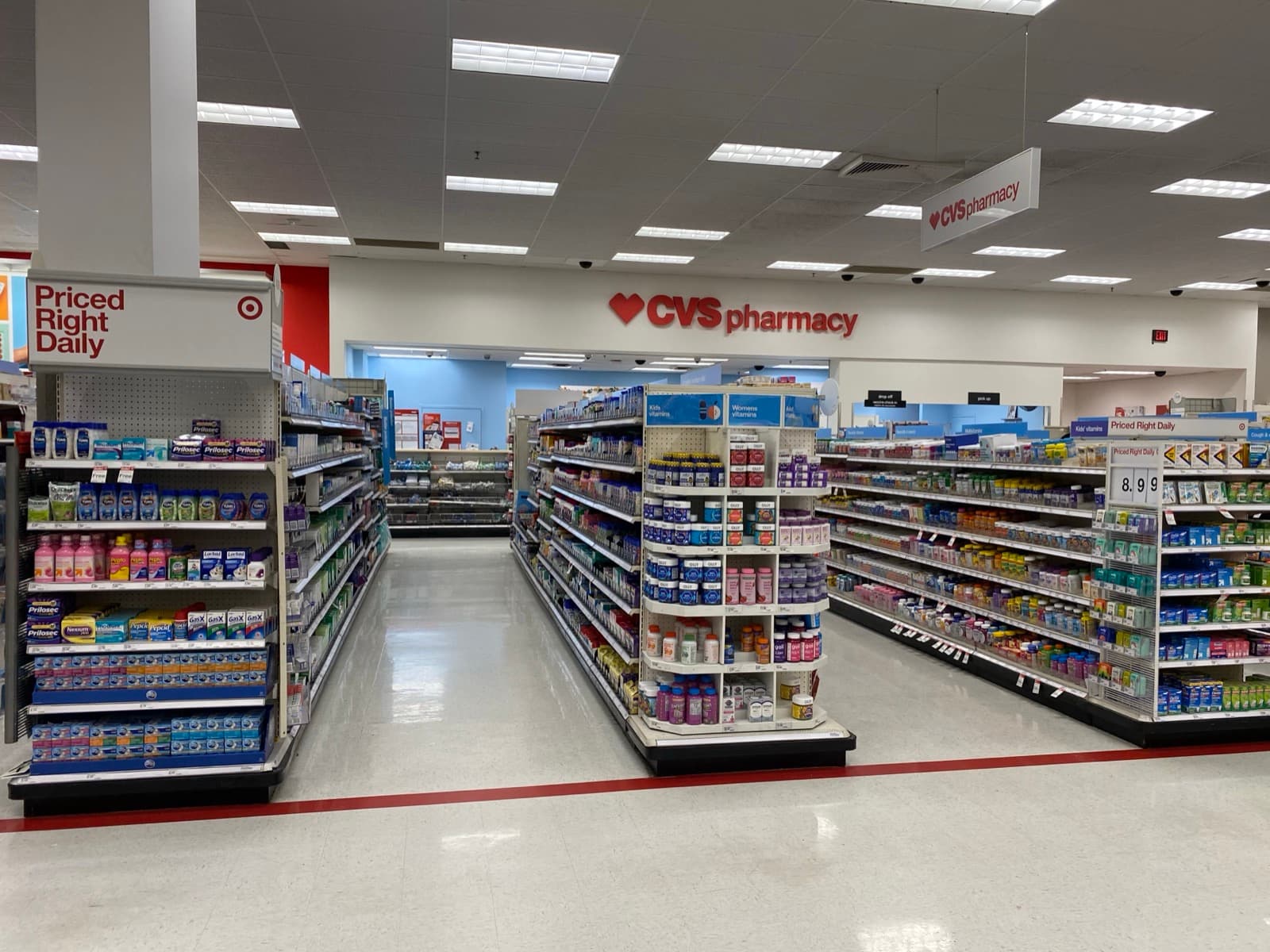
Meanwhile the old channel contracts. CVS has closed roughly 900 locations, Walgreens announced plans for about 1,200 more, Rite Aid shuttered around 800 in bankruptcy. Research on access finds that 46% of U.S. counties contain at least one pharmacy desert — an area where the nearest retail pharmacy is ten miles or more away — with closures concentrated in lower-income, lower-reimbursement areas. Manufacturers responded by opening their own direct channels. So the disruption cuts both ways: cheaper, faster care for people with a credit card and broadband, thinner access for people without either.
The trust problem
HIPAA, the law most Americans assume protects their medical privacy, mostly doesn't apply here. It governs providers, health plans, and their business associates — not a fitness tracker, a wellness app, or a consumer genomics company. The FTC's Health Breach Notification Rule fills part of the gap, and a bill introduced in November 2025 would direct agencies to write rules specifically for wearables and wellness apps. Until then, the most intimate data you generate lives under consumer protection law, not medical privacy law.
The 23andMe bankruptcy made that concrete. A company holding genetic data on millions of people filed Chapter 11 in March 2025, and its DNA database went through a court-supervised auction, selling for $305 million. Two dozen state attorneys general intervened, arguing genetic information isn't ordinary property to be liquidated. Your data's protection is only as strong as the balance sheet holding it.
There's a quieter conflict too. When the platform interpreting your result also sells the treatment, the incentive to find something is structural, not malicious. Broad screening in people without symptoms produces false positives at predictable rates — some leading to real diagnoses, others to anxiety, follow-up scans, and procedures carrying their own risks.
A cardinal approaching an unfamiliar feeder does it in stages. One branch, then a closer branch, then a quick pass, watching. One bad experience and it won't return for weeks. Consumer health sits at exactly that stage of approach, and the industry keeps behaving as though trust has already been granted.
Key Judgments
- The durable model is subscription access to routine, chronic, predictable care. Where a condition needs ongoing management, cash-pay platforms compete well; where it needs coordination or acuity, they don't.
- Cash-pay economics beat insured economics at the same price — no denials, collections, or concessions. That margin gap, more than consumer demand, pulls incumbents like the national labs into the channel.
- Retail contraction plus manufacturer-direct distribution is unbundling the pharmacy counter: convenience shifts to shipping, clinical counseling loses its home.
- Data regulation is the largest unpriced risk here. One high-profile failure could reset the category.
Risks & Counterarguments
The strongest counterargument is that this is a niche dressed as a revolution. Cash-pay care serves people who can afford to pay twice — once in premiums, once at the point of service. Most spending concentrates in a small share of very sick patients, and almost none of that care moves to a subscription app.
Fragmentation is a real clinical risk too. A patient with a telehealth prescriber, a wearable, a lab subscription, and a primary care doctor who knows about none of them isn't obviously better cared for. And price transparency has been mandated before and complied with poorly; assuming published prices produce shopping behavior is a leap the evidence hasn't earned.
Why It Matters
Every functioning consumer market has one thing this one is finally getting: a customer who knows the price and can walk away. If even the routine tier of American medicine develops price discipline, it pressures everything above it. If it instead develops surveillance and a privacy accident, it discredits the idea for a decade. The deciding factor is trust, not technology.
What We're Watching
- Consumer-initiated testing revenue in the national labs' quarterly filings via SEC EDGAR — the cleanest read on whether patients keep paying cash.
- Subscriber retention, not growth, at the large direct-to-consumer platforms. Churn tells you whether these are habits or trials.
- Federal health data legislation covering wearables and wellness apps, plus FTC enforcement under the Health Breach Notification Rule.
- Direct primary care enrollment after the 2026 health savings account change, the first time policy favored the model.
Sources: Quest Diagnostics quarterly and annual results; Hims & Hers financial disclosures via SEC EDGAR; FTC Health Breach Notification Rule; CMS hospital price transparency requirements; published research on pharmacy closures and access; court filings in the 23andMe Chapter 11 proceeding. This is analysis, not investment advice, and nothing here is medical advice.